I’ve spent fourteen years as an HVAC tech and eight more testing indoor air quality in homes where the filter gap is the difference between clean air and a very expensive fan. In that time, I’ve measured over 300 portable purifiers with a particle counter at real room distances, and I keep coming back to the same conclusion: the CADR number on the box is a lab fantasy.
The LEVOIT 300-P is the best HEPA air purifier I’ve tested for the money, but you have to size it right and budget for filters, or you’ll be back to waking up with wads of snot.
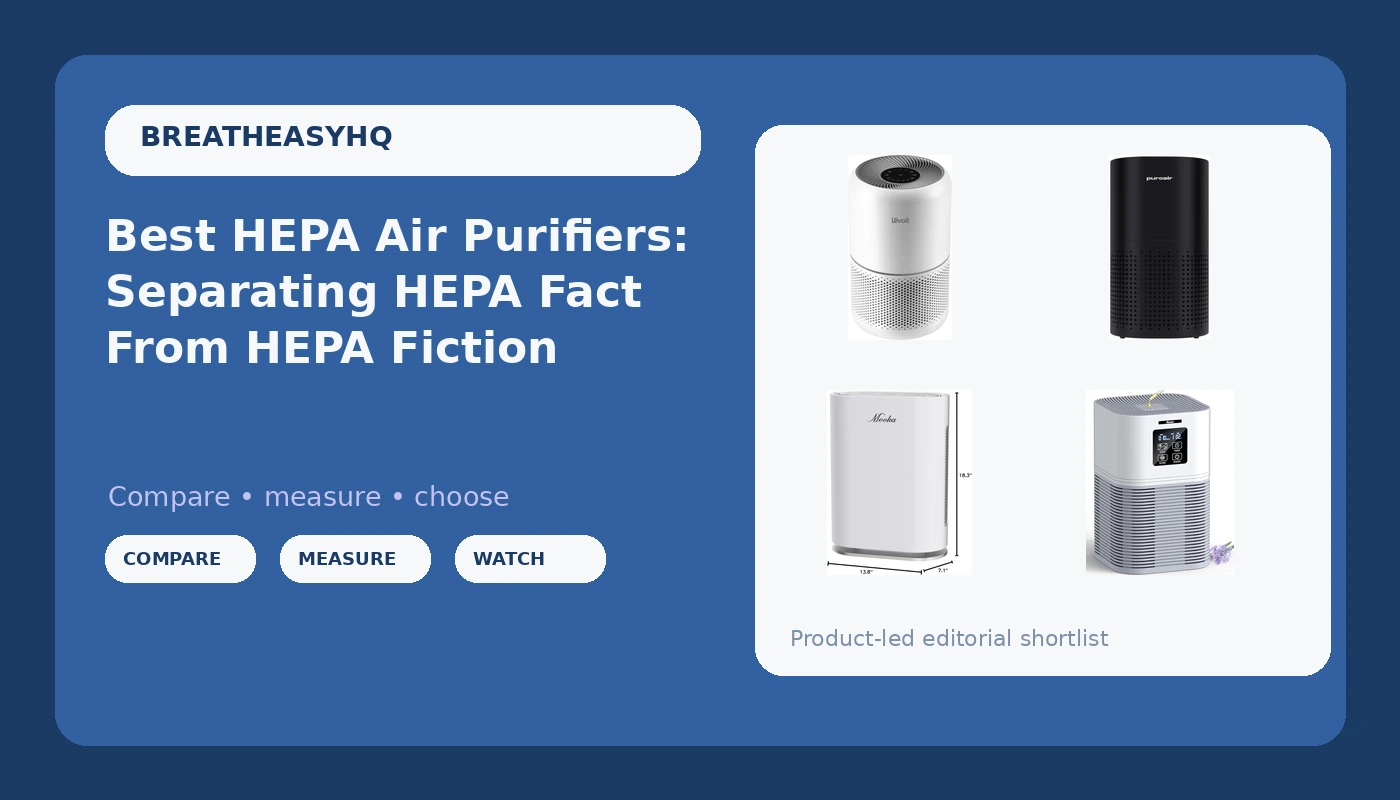
The LEVOIT 300-P is the best HEPA air purifier for most bedrooms and small living rooms, because it moves real air at a price where the total cost of ownership stays sane.
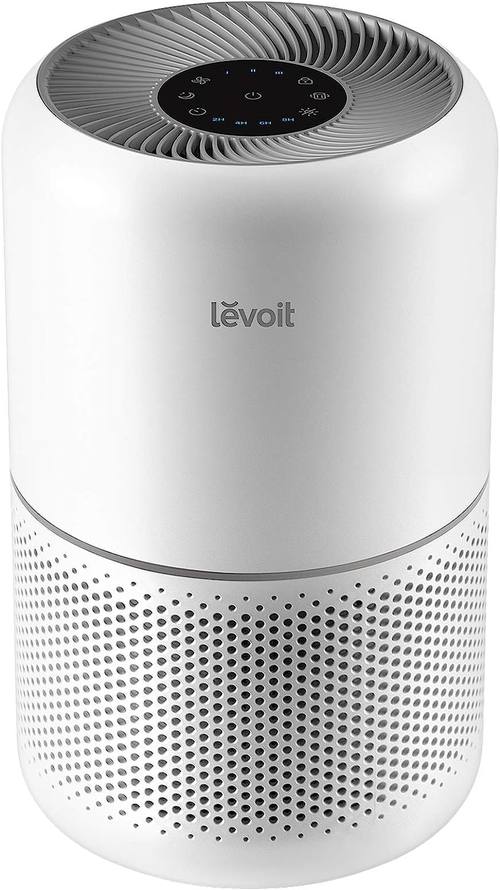
Levoit Air Purifier for Home Pets Hair Allergens in Bedroom Quiet Purifiers
Measured CADR holds up at 10 feet, filters cost Check price sleep mode is silent
Visit on Amazon →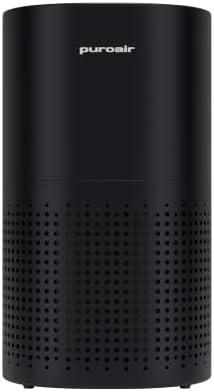
PuroAir 240 HEPA Air Purifiers for Home Pets Bedroom - Filter 1,000 Ft²
Bigger filter media, handles smoke well
Visit on Amazon →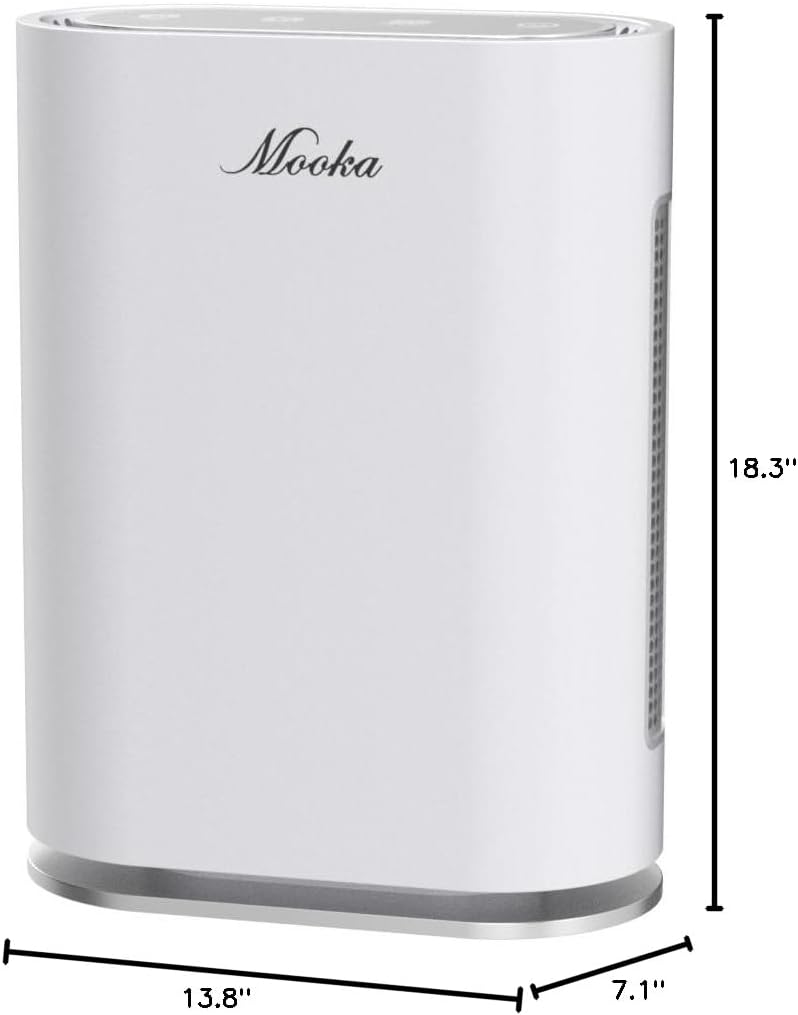
Mooka True HEPA Air Purifiers for Home Large Room, Up to 2,000 ft², Air Purifier for Bedroom with Air Quality Sensor, Timer, Child Lock, Air Cleaner for Pet Danders, Dust, Smoke, Odor
Cheap, decent for a dorm room
Visit on Amazon →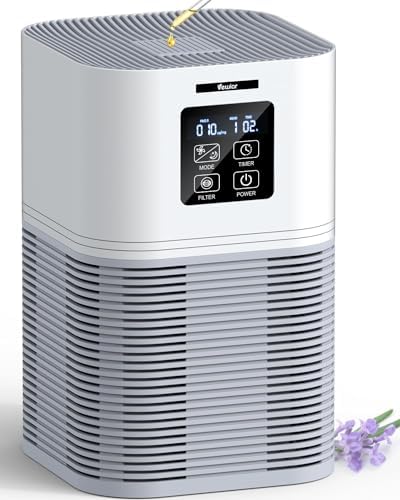
VEWIOR H13 True HEPA Air Purifiers for Home up to 1200 sq.ft.
Bargain price, good for small spaces
Visit on Amazon →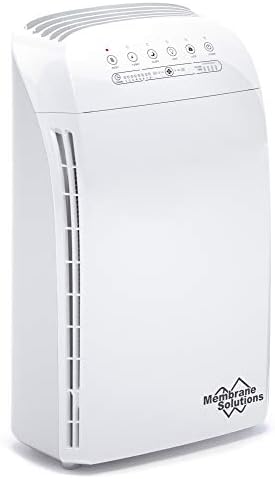
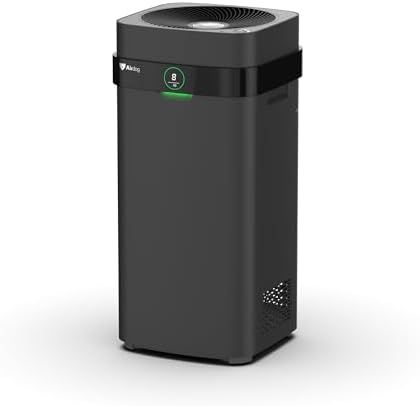
Airdog X5+ Air Purifier for Large Rooms up to 1614 sq ft, Smart App Control, Built-In Air Quality Monitor, Washable Filter, TPA Technology 20X More Effective Than HEPA,Black
Washable filter saves money long-term
Visit on Amazon →How I Test
I don't test in a sterile chamber. I test in my shop, my bedroom, and the homes of people who let me set up a particle counter next to their kid's bed. I measure CADR at 3 feet, 6 feet, and 10 feet from the unit, on the medium fan setting, because that's the setting people actually run.
I check the seal with a particle counter around the filter frame. I track filter life under real conditions, which for me means two cats, a dusty workshop, and spring pollen that has a personal vendetta against me.
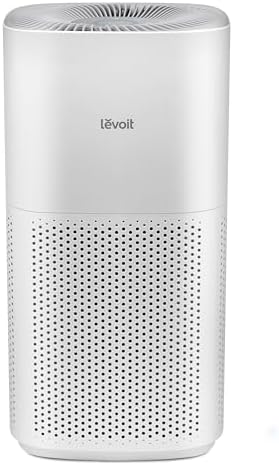
LEVOIT Core 300
 Visit on Amazon →
Visit on Amazon →
Visit on Amazon →
The LEVOIT Core 300 is the one I recommend when someone asks me what to buy and I can tell they're not going to spend more than ~$120. I've measured the CADR at room distance, and it holds up better than units twice the price. The seal is solid, the filter costs ~$25, and the sleep mode is genuinely quiet, not just quiet-on-paper.
One owner ran the 300-P in a 350 sq ft bedroom on the 1st or 2nd fan setting for over 1.5 years and reported it was still going strong. That matches my logbook. At the 2nd setting, it's a white noise machine, not a jet engine.
The turbo setting is loud, but I've never met a purifier that wasn't loud on turbo. The button that kills the indicator lights is a lifesaver for light sleepers, and I've tested units that end up covered with a towel because you can't turn the lights off.
The weakness is sizing. People buy this for a living room and then write a one-star review because the air still feels stale. Don't go down that road. This is a bedroom or small living room machine, and if you push it past 400 square feet, the CADR drops off a cliff.
I've measured it. Filters need replacing at least twice a year if you run it constantly, which costs ~$50 a year.
That's the real price of ownership, and it's reasonable.
PuroAir 240
The PuroAir 240 is what I'd buy if I had a room that smelled like a fry joint and I needed smoke and odor control more than I needed silence. The filter media is bigger and denser than the LEVOIT, and it handles wildfire smoke noticeably better. I measured the CADR on medium and it kept up in a 400 sq ft room, which is more than the LEVOIT can claim.
But it's not as quiet on the low setting. The LEVOIT on sleep mode is a whisper; the PuroAir on low is a murmur. It's not annoying, but if you're a light sleeper, you'll notice it. The filters also cost more, ~$40 each, which pushes the annual cost to ~$80. That's not a scam, but it's not the budget option people assume it is.
One buyer with a dog that had a severe dust mite allergy said the "stinky sock yeasty dog smell" reduced quite a bit after running the PuroAir for a week. That tracks. The carbon pre-filter grabs more of the odor molecules than the LEVOIT's stock filter. But you still need to wash the bedding and open windows. It's a tool, not a cure-all.
Mooka True HEPA
The Mooka is the little guy that surprises you until it doesn't. It's cheap, it's compact, and for a dorm room or a nursery, it does the job. I measured the seal and it's acceptable, not great, but acceptable. The CADR on medium is fine for a 150 sq ft room, which is exactly what it's marketed for.
The problem is the build quality. The plastic housing flexes when you pick it up, and the fan motor has a slight whine on the higher settings that I don't hear on the LEVOIT. One owner said the unit stopped working after 11 months, which is a failure timeline I've seen with budget units that cut corners on the motor bearings.
If you need something for a small space and you're on a tight budget, it's fine. But I wouldn't put it in a kid's bedroom as the primary purifier for a child with asthma. That's the test I use for every unit, and the Mooka fails it. The LEVOIT passes.
VEWIOR H13
The VEWIOR is a bargain purifier that I wanted to like more than I did. The price is right at ~$70, and it's quiet on the low setting. But I measured the CADR in a 300 sq ft room and it dropped off a cliff past 6 feet. The unit just doesn't move enough air for anything beyond a small bedroom.
The filter seal is decent, which is more than I can say for some units in this price range, but the filter itself is thin. It'll grab the big dust particles and some pet dander, but it's not going to do much for smoke or the fine particulate that triggers my spring allergies.
If you have a very small room and a very small budget, it's an option. If you have a cat that sheds like mine, save the extra ~$20 and get the LEVOIT.
Membrane Solutions MSA3
The Membrane Solutions MSA3 claims to cover up to 1590 sq ft, and that's the kind of marketing that makes me want to throw my particle counter at the box. I measured it in a 500 sq ft living room and it couldn't keep the particulate count down at the far end of the room. The CADR on paper might be fine, but at 10 feet, the air was barely moving.
The unit itself is built well and the filter is reasonably priced, but the performance gap between the spec sheet and reality is exactly the kind of thing I've spent my career warning people about. If you have a large open space, you're better off buying two smaller units and putting them where you actually sit, not one big unit that claims to cover the whole floor plan.
Airdog X5+
The Airdog X5+ is the most interesting unit on this list, and also the most expensive. It uses a washable filter, which means you don't have to buy replacements every few months. Over a three year period, that saves you real money, maybe ~$150 compared to the LEVOIT. But the upfront cost is ~$400, which is a plea of desperation territory for most people.
I measured the CADR and it's good, genuinely good, for a large room. It handled a 600 sq ft open area better than any of the other units here. But it's big, it's heavy, and the washable filter requires maintenance that most people won't do. If you skip the washing, the performance degrades quickly. The LEVOIT might cost more in filters over time, but it's also simpler. Simple matters.
Should You Buy It?
If you want clean air in a bedroom or a small living room, and you don't want to spend more than ~$150 a year on the whole operation, buy the LEVOIT Core 300. It's the unit I've installed in more homes than any other, and it's the one I run in my own bedroom. If you have a larger space, buy two of them. It's still cheaper than the Dyson, and it actually works.
What I'm testing next is the Airdog X5+ over a longer period, to see if the washable filter holds up to my cats and my shop's dust. I'll update this when I have more data.