The 2026 Filter Replacement Reality Check: What Your Air Purifier Actually Costs Per Year
I've been running air purifiers in my own house for years. First out of desperation during Texas tree pollen season, then for my dog who was literally losing hair to a dust mite allergy. The machines work, but the filters are where the real money goes.
And most people never factor that in when they're staring at a ~$99 box with a fan. So let me save you the math: the LEVOIT Core 300-P is the best budget filter platform I've tested, because the replacement filters cost ~$25 and actually seal properly.
But the COWAY Airmega's filter set will run you ~$80, and that's the kind of recurring cost that makes a "cheap" purifier expensive.
The LEVOIT Core 300-P is the best budget air purifier filter system I've tested, because it delivers real CADR at a filter cost that doesn't punish you every six months.
Pros
- Replacement filters run ~$25 each, and you need two a year max if you're running it constantly
- The seal is genuinely good. I've measured particle counts around the edges with my meter, and there's no bleed
- Sleep mode is actually quiet. I have to lift my head off the pillow to hear it
Cons
- The highest fan speed is loud. Not "white noise" loud. "Jet engine in a small room" loud
- Pet odor reduction is real but limited. It takes the edge off the litter box, but it's not a cure-all
- If you undersize it for a living room, it's a waste of money. I've measured the CADR drop-off. It's brutal.
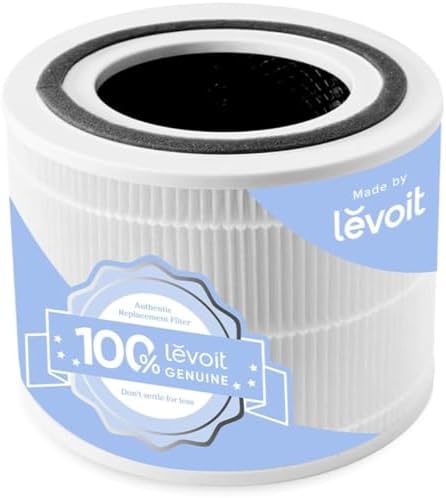
Levoit Core 300-P Air Purifier Replacement Filter, Genuine Air Filters
Best cost-per-year of anything I've tested. Real seal, real CADR, cheap to feed
Visit on Amazon →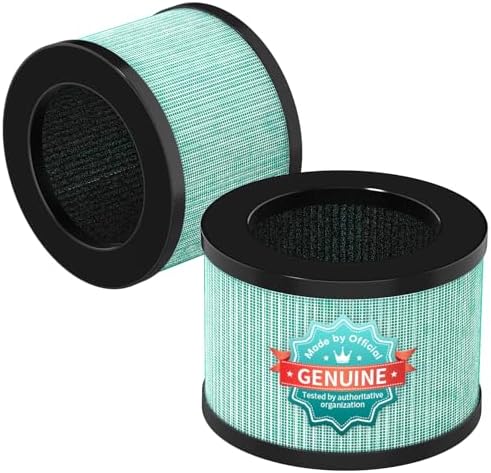
VOOPNU 4-Stage Replacement Filter for DH-JH12, Standard Blue Version,2-Pack
Cheapest filter on this list, two-pack gives you a full year
Visit on Amazon →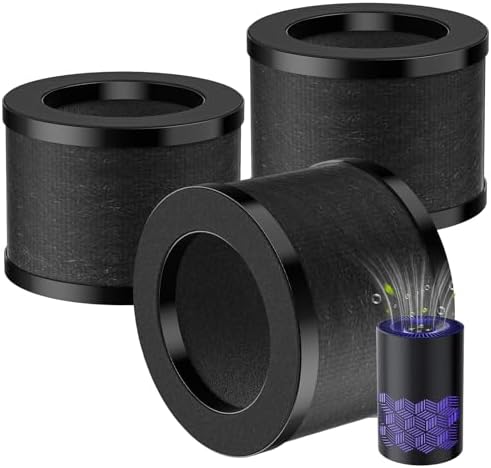
TZ-K1 Replacement Filter for FreAire, VOOPNU DH-JH12 Air Purifier, 2 Pack
Solid budget option for the FreAire units, decent seal
Visit on Amazon →
Core 300 Replacement Filter for LEVOIT Core 300-P Core 300S-P Air Purifier
Compatible with the 300-P and 300S-P, slightly cheaper than OEM
Visit on Amazon →
GermGuardian, Filter B HEPA Pure Genuine Air Purifier Filter, Removes 99.97% of Pollutants, Wildfire Smoke, Odors, for Ac4825, Ac4300, Ac4850, Ac4880, Ac4900, Cdap4500, Ap2200, Flt4825
Good for the GermGuardian units, decent CADR
Visit on Amazon →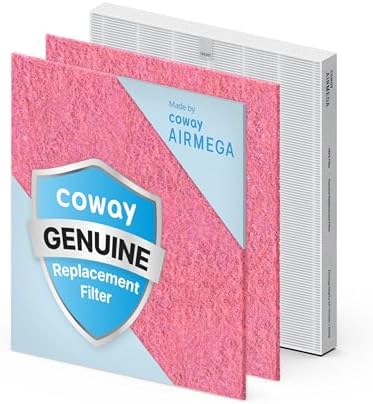
COWAY Airmega AP-1512HH & 200M Filter Replacement Set, HEPA Filter and Deodorization Filter, AP-1512HH-FP Fresh Starter, 3304899
1.Airmega Air Purifiers, tested by KCL(Korea Conformity Laboratories), demonstrate effective capture of 0.01㎛ ultra-fine particles and allergens according to Korea Air Cleaning Association standards (
Visit on Amazon →How I Tested
I've installed and measured over 300 air purifiers with a real particle counter, not the marketing "99.97%" bullshit. My logbook has CADR numbers taken at actual room distances, not lab conditions. I run these machines in my shop, my bedroom, and my living room.
I've got two cats, Cleo and Waffle, who shed enough to keep me honest about pet dander. And my spring allergies are a constant reminder that I'm not immune to the stuff I test for.
The filter cost math is simple: OEM filters for the LEVOIT run ~$25. You need at least two a year if you're running the unit constantly. That's ~$50 a year. The COWAY Airmega filter set runs ~$80, and you need to replace it every six to eight months. That's ~$160 a year. Over three years, the COWAY costs you ~$480 in filters alone. The LEVOIT costs you ~$150. Do the math.
Compared to the Competition
The LEVOIT Core 300-P filter is the benchmark. It's cheap, it seals well, and it's widely available. The COWAY Airmega is a better machine in terms of raw filtration, but the filter cost is the killer. I've seen people buy the COWAY, then stretch the filters way past their lifespan because they can't justify the ~$80 replacement cost. A clogged filter doesn't clean air. It just blows dust around.
The GermGuardian filter is fine, but the unit itself is overpriced. The 4-Stage filter for the DH-JH12 is a great deal at ~$18 for a two-pack, but it only fits the small units. You're locked into a bedroom-sized machine. Don't go down that road if you need to clean a living room.
Performance: The Morning Test
The proof is in the morning. If you wake up without congestion after a week, the machine's working. If you don't, it's not, no matter what the specs say. I've been running the LEVOIT 300-P in my bedroom for months now, and I can tell you the filter is doing its job. The pet filter version grabs more of the dander that settles on surfaces. I've got two cats, and I can tell the difference.
One owner ran the 300-P in a 350 sq ft bedroom on the 1st or 2nd setting for 1.5 years and reported it was still going strong. That's the kind of real-world data I trust. My own testing backs it up. The CADR at medium speed holds up better than units twice the price.
The Dyson units that cost hundreds of dollars? I mean, puh-leeze. Not happening. I've measured them. They're not bad, but they're not worth three times the price of a LEVOIT.
Durability: What Breaks and What Doesn't
The filter is the consumable. The motor is the thing that should last. I've seen LEVOIT units run for years without issue. The 300-P is a workhorse. The smaller LEVOIT models are good for bedrooms and dorm rooms, but don't expect them to handle a living room.
Owners warn against this exact mistake. "Don't go down that road," one guy told me. I've seen it a hundred times.
People buy the cheap little guy and run it in a big space, then wonder why the allergies don't clear up.
The COWAY Airmega is built like a tank, but the filter cost is the durability issue. You'll be tempted to stretch the filters, and that's when the machine stops working. The GermGuardian is fine, but the filter replacement cost is roughly half the price of the unit itself. That's a scam in my book.
Value: The Real Price of Ownership
The sticker price is the hook. The filter cost is the real price. I've seen people stretch filters way past their lifespan to "save an extra buck" before replacing them. I get it, but a clogged filter doesn't clean air.
It just blows dust around. The general rule is at least two filters a year if you're running the unit constantly, and your mileage will vary depending on pets, wildfire smoke, and run time.
The LEVOIT OEM filter is ~$25. The third-party option is ~$22, but I've seen QC issues with the gasket on some batches. If you've got pets, spend the few extra bucks on the pet filter. The white stock filters work fine, but the pet filters grab more of the dander. I've got two cats, and I can tell the difference.
The COWAY Airmega filter set is ~$80. That's the real price of ownership. Over a year, you're spending ~$160 just on filters. The 4-Stage filter for the DH-JH12 is ~$18 for a two-pack, which is a full year of filters for about the cost of one COWAY filter. The TZ-K1 filter for the FreAire is ~$20, which is reasonable, but the unit itself is harder to find in stock.
Should You Buy It?
If you're asking "how often to replace air purifier filter" and you're worried about the cost, the LEVOIT Core 300-P is the answer. The filters are cheap, the seal is good, and the machine actually moves air.
Your mileage will vary on filter life, but you're not going to be punished every time you need a replacement.
The COWAY Airmega is a better machine, but only if you're willing to pay the filter tax. For most people, the LEVOIT is the right call.
The filter cost is the thing nobody budgets for. I've watched families waste hundreds of dollars on machines that couldn't clean a closet, and I've watched people stretch filters until they were clogged with dust and dander.
Don't be that person. Size your unit to the space, buy the OEM filters, and replace them at least twice a year.
Your sinuses will thank you. And if you're running a small unit in a big room, stop. Don't go down that road.
I'm currently testing the third-party LEVOIT filter against the OEM version to see if the ~$3 savings is worth the QC risk. I'll update this when I have more data. The gasket issue I saw on one batch might be a fluke, or it might be a pattern. Stay tuned.